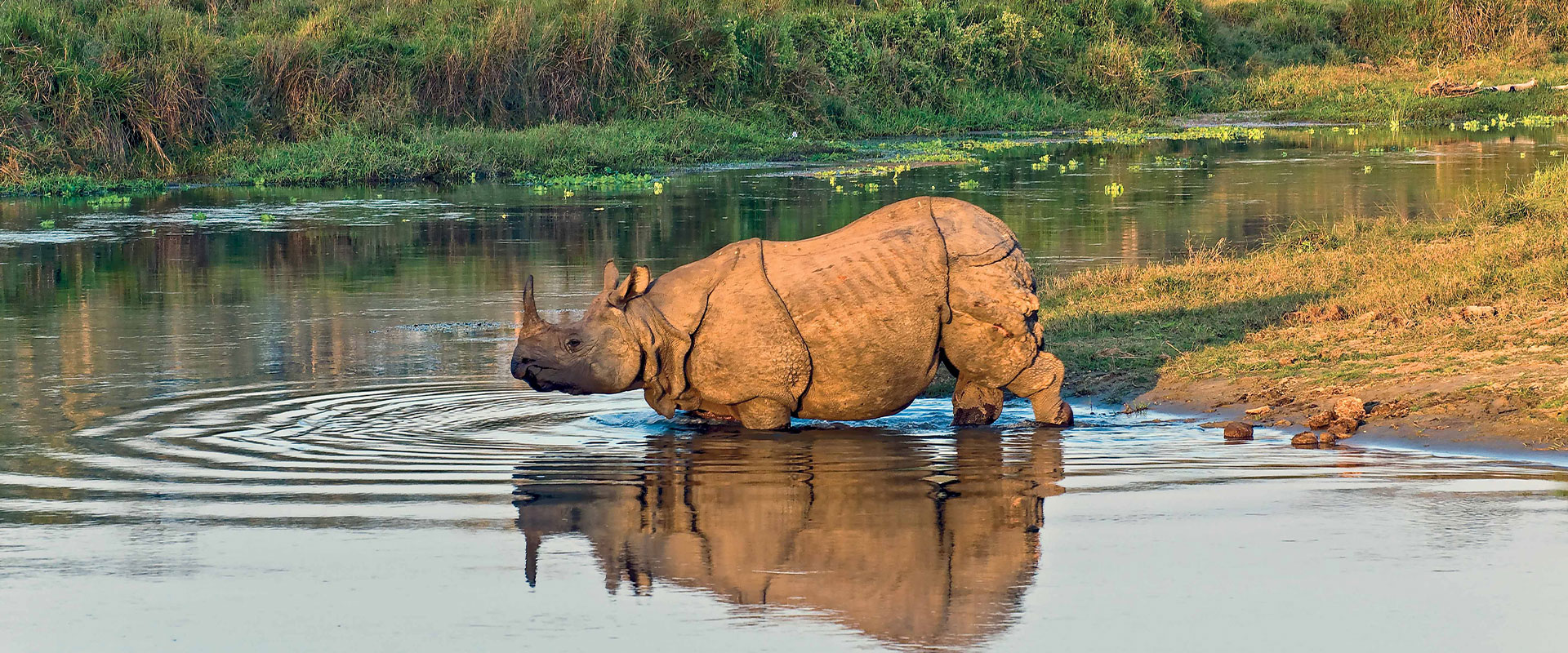
One Horn Rhino and Bengal Tiger in Chitwan National Park
Chitwan National Park, located in southern Nepal, is a great treasure for environment and animal aficionados. The park, which was formed in 1973, spans 932 square kilometers and is a UNESCO World Heritage Site. It is regarded as one of the top national parks in Asia for wildlife viewing, and it is home to a variety of creatures, including the magnificent larger one-horned rhinoceros and the powerful Bengal tiger.
The Indian rhinoceros, commonly known as the bigger one-horned rhinoceros, is a large mammal that can weigh up to 2,300 kg. Herbivores, these rhinos eat grasses, fruits, and aquatic vegetation. They have a single horn on their snout that can grow to be 60 cm long. Because of habitat degradation and poaching, the greater one-horned rhinoceros is considered a vulnerable species.
Their population had previously decreased dramatically, but because to conservation initiatives, their numbers have increased in recent years. The Chitwan National Park is home to approximately 645 greater one-horned rhinoceros, which account for more than 70% of the global population.

The Bengal tiger is a huge cat that can reach 300 kg in weight. They are apex predators that eat on a wide range of animals such as deer, wild pigs, and even rhinos. Bengal tigers are distinguished by their striking orange coat with black stripes, which allows them to blend into their natural habitat's thick grasses and woodlands. Bengal tigers are considered an endangered species, with an estimated wild population of 3,000. The Chitwan National Park is home to approximately 120 Bengal tigers, which account for approximately 4% of the global population.
Aside from the greater one-horned rhinoceros and Bengal tiger, the Park provides tourists with the opportunity to witness a variety of other animals, such as the Asiatic elephant, gaur (Indian bison), sloth bear, and spotted deer. There are also approximately 450 bird species in the park, including the Bengal florican, the huge hornbill, and the paradise flycatcher.
The option to go on a jungle safari is one of the most distinctive aspects of visiting the Park. Visitors can witness the creatures in their natural habitat by taking a vehicle or elephant ride around the park. They can also go on a guided walk through the park to see the animals and learn more about their behavior and habitat.
To safeguard these animals, the park has undertaken a number of conservation projects, including anti-poaching patrols, habitat restoration, and community-based conservation efforts. These efforts have resulted in the population of the greater one-horned rhinoceros and Bengal tiger growing. However, while wildlife watching and conservation are vital, they must be done responsibly and sustainably, such as through regulated ecotourism, to maintain the animals' well-being and the preservation of their habitats for future generations.

Finally, Chitwan National Park is a must-see location for environment and animal fans. Visitors can witness a variety of creatures in their native habitats, including the magnificent larger one-horned rhinoceros and the fearsome Bengal tiger, in the park. To safeguard these animals, the park has undertaken a number of conservation projects, including anti-poaching patrols, habitat restoration, and community-based conservation efforts. These efforts have resulted in the population of the greater one-horned rhinoceros and Bengal tiger growing. Visitors can have a jungle safari by vehicle or elephant to explore the wildlife and learn more about their behavior and habitat.
While wildlife watching and conservation are vital, they must be done responsibly and sustainably to preserve the well-being of the animals and the preservation of their habitats for future generations. Overall, Chitwan National Park is a location where you may have fun, learn a lot, and laugh a lot.

